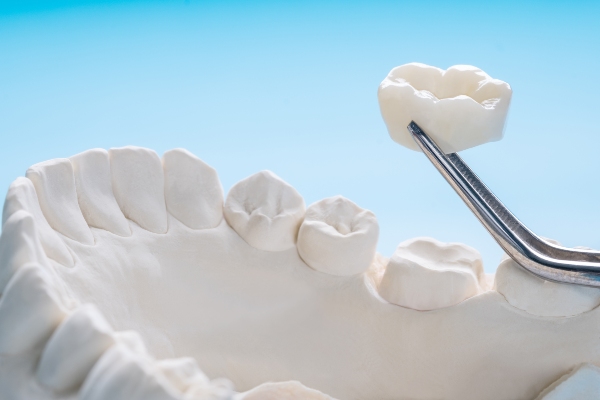
 Research reveals that a dental crown often follows a root canal. This restoration can strengthen and protect the treated tooth. Understanding if you need this restoration will help you prepare for the visits after the root canal therapy. Here are the details about when a dental crown is necessary after your treatment.
A dental crown after root canal therapy
The dentist may recommend a dental crown placement if the individual has a weak tooth. It can strengthen and protect the treated tooth from future damage or decay. This extra layer of protection enables the weakened tooth to continue functioning well. A dental crown can hold the tooth together after the root canal therapy.
The rule
A back tooth that has undergone root canal therapy must get a dental crown. This is a rule of thumb because these teeth are used for chewing or grinding food. The dentist will insist on placing a cap over a back tooth because it should always be kept strong. A patient must have these teeth intact for proper digestion.
Studies show that a root canal destabilizes the tooth. Any form of damage could weaken it or lead to its deterioration. One such cause could be bruxism or biting into a hard piece of food. The dentist will place a crown over the tooth and shield it from more damage or infection. An individual needs the cap so that the targeted tooth can chew well again.
Conditions in getting the dental crown
Placing a cap over the root canal-treated tooth will depend on the tooth’s position. The back teeth are chewing teeth. They will need caps to stay in place and withstand the pressures of grinding food. The dentist will also consider the amount of remaining dental structure after the root canal treatment. The dental crown will restore the tooth’s integrity if more than half of it is gone.
Reasons for having a crown after a root canal
This type of treatment is invasive. It compromises the general remaining dental structure. That is why a dental crown is necessary after a root canal treatment. Below are some of the important reasons for placing a dental crown over a root canal-treated tooth:
- To protect the tooth from temperature sensitivity
- To prevent infection
- To restore the natural appearance of the tooth
- To bring back the tooth’s function
- To add more security to the tooth
The process
The dentist will start preparing the root canal-treated tooth by shaving off the remaining dental structure. This first stage will enable the dental crown to fit over the tooth. Next, impressions of the treated tooth will be taken. The dental lab will use the molds to create the custom-fit cap. The patient will wear a temporary crown to protect the tooth until the permanent crown is ready.
After two weeks, the patient will receive a permanent dental crown. The temporary crown will then be removed. Adjustments will ensure that the cap fits. The dentist will cement the crown over the treated tooth. A curing light will harden and fix the cap in place.
The dentist will place a dental crown over the treated tooth to keep it healthy
A root canal treatment will restore your tooth’s health and appearance. However, this therapy can weaken the dental structure. That is why the dentist often insists on placing a dental crown over the tooth. Working with your dentist can keep the cap in top shape and your underlying natural tooth healthy.
Request an appointment or call Harborside Dental at 231-943-6076 for an appointment in our Traverse City office.
Related Posts
Dental crowns are an effective solution for restoring damaged and decayed teeth. They protect the tooth from further damage while enhancing its appearance, blending in with the rest of your smile. However, it can be difficult to choose between the many types of crowns, such as porcelain and metal, as each of these materials has…
A dental crown is a tooth-shaped cap that reinforces, repairs, or replaces badly damaged teeth. It is one of the strongest and most versatile dental restorations. In addition to its role in tooth replacement, a dentist may recommend a crown when a tooth is so badly damaged that more minor restorations, such as fillings and…
A general dentist may use a dental crown for several reasons, from restoring decayed or damaged teeth to supporting teeth replacements. Just as there are many applications for crowns, there are also many types of them. Porcelain and porcelain-fused-to-metal (PFM) are among the most commonly recommended by dentists. Learning the key differences between these crowns…